
Discover what it takes to cycle to Uhuru Peak on Mount Kilimanjaro. Learn about the Kilema Route, preparation, equipment, altitude and the ultimate bike summit challenge.
Kilimanjaro Bike Summit
Standing at 5,895 metres above sea level, Uhuru Peak is the highest point in Africa and one of the world’s most iconic adventure destinations.
Every year, thousands of trekkers set out to reach the summit of Mount Kilimanjaro. But for a small and determined group of mountain biking enthusiasts, walking to the Roof of Africa isn’t enough.
They want to ride there.
A Kilimanjaro Bike Summit is one of the most extraordinary cycling challenges in Tanzania, combining mountain biking, high-altitude adventure, physical endurance and breathtaking scenery. Instead of experiencing Kilimanjaro entirely on foot, riders take their mountain bikes through a designated cycling route toward the summit, tackling rugged terrain and extreme changes in altitude along the way.
At Kili Bike Adventures, we provide guided cycling expeditions for riders who are ready to take on one of the world’s most challenging mountain biking experiences.
Can You Cycle to the Summit of Mount Kilimanjaro?
Yes, it is possible to reach Uhuru Peak with a mountain bike, using the Kilema Route, which is the designated cycling route on Mount Kilimanjaro.
However, it is important to understand that a Kilimanjaro bike summit is not a conventional mountain bike ride.
As altitude increases, the terrain becomes progressively more difficult and the environment more extreme. Some sections may require riders to dismount and push or carry their bicycles rather than ride continuously.
The objective is not simply to remain on the bike from the base of the mountain to the summit. The real achievement is successfully taking your bicycle through one of Africa’s most challenging high-altitude environments and reaching Uhuru Peak.
What Is the Kilema Route?
The Kilema Route provides the principal access for mountain bike expeditions on Kilimanjaro.
The route allows cyclists to experience the mountain’s changing ecological zones as they gain altitude. The landscape transforms dramatically during the journey, making the expedition as visually impressive as it is physically demanding.
Lower sections can include forest environments, while higher elevations transition through heath and moorland, alpine desert and eventually the cold, barren landscape surrounding the summit.
This extraordinary ecological progression is one of the defining features of a Kilimanjaro cycling expedition.
You begin surrounded by vegetation and gradually enter a world where the landscape becomes increasingly sparse and the effects of altitude become more pronounced.

How Long Does a Kilimanjaro Bike Summit Take?
The duration of a Kilimanjaro bike summit expedition depends on the itinerary, route planning, acclimatization strategy and the cycling team’s experience.
Many cycling itineraries are designed over several days to allow riders to gain altitude progressively and give their bodies time to adapt.
This is extremely important.
The summit should never be treated as a race. At high altitude, moving too quickly can increase the risk of altitude-related problems and reduce your ability to safely complete the expedition.
A well-planned itinerary balances cycling distance with acclimatization, rest and the changing mountain environment.
Why Attempt a Kilimanjaro Bike Summit?
A Challenge Few Cyclists Can Claim
Reaching the summit of Mount Kilimanjaro is already an impressive accomplishment.
Doing it with a mountain bike takes the challenge to another level.
You are combining endurance cycling with high-altitude mountaineering, requiring physical preparation, mental resilience and the ability to adapt to constantly changing conditions.
When you finally reach Uhuru Peak with your bike beside you, you will have accomplished something very few cyclists around the world can claim.
Experience Kilimanjaro From a Different Perspective
A traditional Kilimanjaro climb and a bike summit expedition offer very different experiences.
Cycling gives you an opportunity to interact with the mountain through a different form of movement. The lower sections can provide rewarding riding, while higher sections test your ability to handle steep, rocky and increasingly demanding terrain.
The bicycle becomes part of the expedition rather than simply a means of transportation.
The Changing Landscapes of Kilimanjaro
Few cycling experiences can match the environmental diversity encountered on Kilimanjaro.
As you climb higher, the scenery changes dramatically.
The journey can take you from lush forest to heath and moorland, followed by alpine desert and finally the cold, dry environment around the summit.
The contrast between these environments makes the journey feel like several adventures in one.

The Ultimate Kilimanjaro Descent
After the physical and mental demands of the ascent, the descent provides another unforgettable chapter.
Where terrain and mountain conditions allow, riders can enjoy sections of downhill riding as they descend through the mountain’s changing landscapes.
After spending days gaining altitude, the feeling of descending on a mountain bike can be exhilarating.
However, safety remains the priority. Steep terrain, loose volcanic material, rocks, fatigue and changing weather mean riders must follow the instructions of their guides and ride according to current conditions.
What Makes a Kilimanjaro Bike Summit So Difficult?
A summit cycling expedition presents challenges that are very different from an ordinary mountain bike tour.
High Altitude
Altitude is one of the biggest challenges.
At 5,895 metres, the summit environment is dramatically different from the conditions around Moshi. The air is thinner, temperatures can be extremely cold and physical exertion becomes considerably harder.
This is why acclimatization is such an important part of the expedition.
Steep and Uneven Terrain
Kilimanjaro is not a smooth mountain biking trail.
Riders can encounter rocky, steep and uneven terrain, particularly as they move toward higher elevations.
Bike-handling skills and physical strength are therefore important, but so is knowing when to get off the bike and walk.
Extreme Weather
Weather conditions can change quickly on the mountain.
A comfortable morning at a lower elevation can eventually give way to cold, wind, clouds or other challenging conditions higher up.
Riders need to be prepared for significant temperature changes throughout the expedition.
Physical and Mental Endurance
The summit challenge requires more than cycling fitness.
You may spend several consecutive days riding, climbing and adapting to altitude. Fatigue can accumulate, while the final stages of the ascent can test your mental determination as much as your physical strength.
Preparation and pacing are therefore critical.
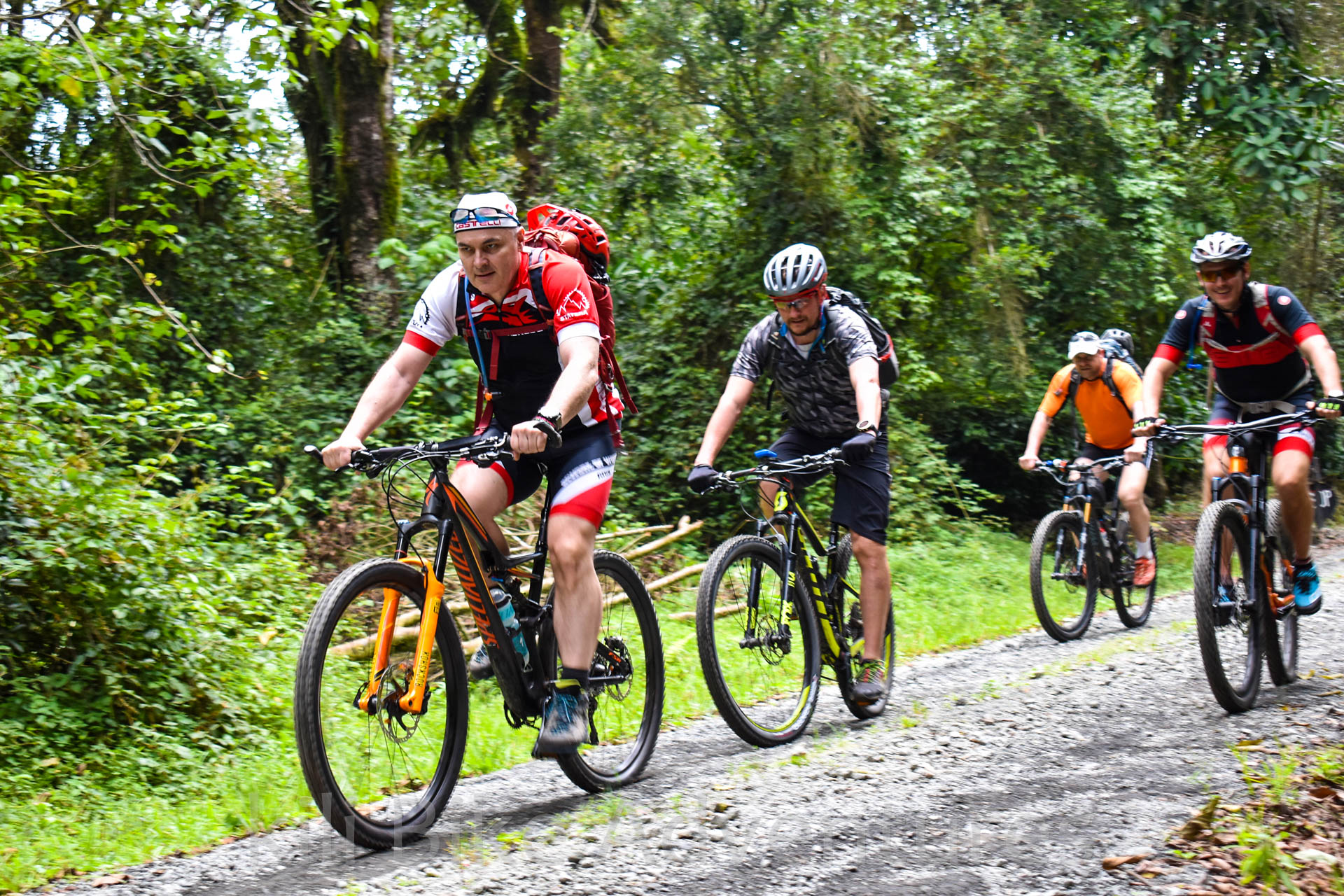
How Should You Prepare for a Kilimanjaro Bike Summit?
A successful bike summit begins long before you arrive in Tanzania.
Build Your Cycling Endurance
Regular cycling should form the foundation of your preparation.
Gradually increase the distance and duration of your rides, and include hills or climbs whenever possible.
If your local terrain allows, practice riding on gravel, rocks, dirt and uneven surfaces so you become comfortable handling a mountain bike away from paved roads.
Train for Consecutive Riding Days
A long single-day ride is useful, but a multi-day expedition requires a different type of fitness.
Try incorporating several consecutive cycling days into your training schedule.
This helps your body become accustomed to exercising while carrying fatigue from previous days.
Strengthen Your Legs and Core
Cycling-specific strength training can complement your riding.
Exercises that develop your legs, core and overall stability can help you handle steep climbs, rough terrain and long days in the saddle.
Practice Pacing
Don’t start the expedition too aggressively.
A controlled pace is particularly important at altitude. The goal is to conserve energy for the entire expedition rather than using too much energy early in the climb.
Your guides can help establish an appropriate pace according to the terrain and altitude.
What Equipment Do You Need for a Kilimanjaro Bike Summit?
Proper equipment is essential for high-altitude cycling.
Your equipment should be selected for both mountain biking and rapidly changing mountain conditions.
Important items can include:
- A properly maintained mountain bike suitable for rugged terrain
- A correctly fitted cycling helmet
- Cycling gloves
- Appropriate cycling footwear
- Hydration system
- Sunglasses and sun protection
- Thermal base layers
- Warm insulating layers
- Windproof and waterproof outer clothing
- Warm hat and gloves for higher elevations
- Personal first-aid and essential medication
- Waterproof bags for important personal belongings
The equipment required can vary depending on the itinerary, season and expected mountain conditions.
Kili Bike Adventures can provide route-specific guidance so riders know exactly what to prepare before arriving in Tanzania.

Do You Need to Be an Experienced Mountain Biker?
A Kilimanjaro bike summit is not the right adventure for someone who has never ridden a mountain bike.
You should be comfortable controlling a bicycle on uneven terrain and capable of handling long periods of physical activity.
Previous experience with climbing, descending, gravel roads and technical mountain biking is highly beneficial.
At the same time, you don’t need to be a professional cyclist.
What matters most is appropriate preparation, physical fitness, mental resilience and a willingness to follow your guides’ advice.
Why Professional Guides Are Essential
A high-altitude cycling expedition should not be approached as an unsupported ride.
Experienced mountain bike guides understand the route, terrain and mountain environment. They can help manage the pace, navigate difficult sections and make decisions based on weather and trail conditions.
Mechanical support is equally valuable.
A bicycle that performs perfectly at the beginning of the expedition can develop problems after days of riding on rough terrain. Having experienced mechanics and appropriate tools available can prevent minor mechanical issues from becoming major problems.
At Kili Bike Adventures, our team combines mountain biking experience with local knowledge to support riders throughout the expedition.
Altitude and Acclimatization: Take It Seriously
One of the most important aspects of a Kilimanjaro bike summit is allowing your body sufficient time to adapt to increasing altitude.
Fitness does not make someone immune to altitude-related illness.
You can be an extremely fit cyclist and still experience difficulties at high elevation.
For this reason, the expedition should be planned around gradual altitude gain, appropriate pacing and careful monitoring of how each rider is feeling.
If you develop concerning symptoms, tell your guide immediately. Reaching the summit is never more important than your health and safety.

What Is the Best Time for a Kilimanjaro Bike Summit?
The drier seasons are generally preferred for Kilimanjaro cycling expeditions because trail and weather conditions can be more predictable.
The periods around January to March and June to October are popular for outdoor adventures on Kilimanjaro.
However, conditions on the mountain can change at any time of year. Even during a traditionally dry period, riders should be prepared for cold temperatures, wind, rain or snow at higher elevations.
Your cycling operator can help determine the most suitable travel period based on the planned route and current conditions.
A Kilimanjaro Bike Summit Is More Than a Bike Ride
It is easy to focus on the physical challenge of cycling to Uhuru Peak, but the experience is about much more than reaching a particular elevation.
It is about watching the landscape transform beneath your wheels.
It is about leaving the forests behind and entering the high alpine environment.
It is about pushing through difficult sections when the altitude makes every movement harder.
And ultimately, it is about standing at the Roof of Africa with your mountain bike beside you and knowing how much determination it took to get there.
Why Choose Kili Bike Adventures?
At Kili Bike Adventures, we understand that a Kilimanjaro bike summit requires careful planning and experienced support.
Our goal is to help riders experience this extraordinary mountain adventure while maintaining a strong focus on preparation, safety and responsible decision-making.
From route planning and mountain bike preparation to professional guiding and logistical support, we work to make your expedition as smooth as possible.
Every rider arrives with a different background, fitness level and objective. We therefore encourage cyclists to discuss their experience and goals with our team so we can help create an appropriate Kilimanjaro cycling itinerary.
Take on the Roof of Africa on Two Wheels
Few cycling achievements can compare with reaching Uhuru Peak at 5,895 metres above sea level.
A Kilimanjaro Bike Summit demands preparation, endurance, patience and determination. It challenges both the body and the mind while rewarding riders with extraordinary landscapes and an achievement that can last a lifetime.
From the lower slopes to the high alpine environment, every stage of the journey tells a different story.
And when you finally reach the summit, your bicycle is more than a piece of equipment—it is a symbol of the journey you have completed.
Ride higher. Push farther. Experience Kilimanjaro on two wheels.
Ready to take on the Roof of Africa? Contact Kili Bike Adventures and start planning your Kilimanjaro Bike Summit adventure today.